

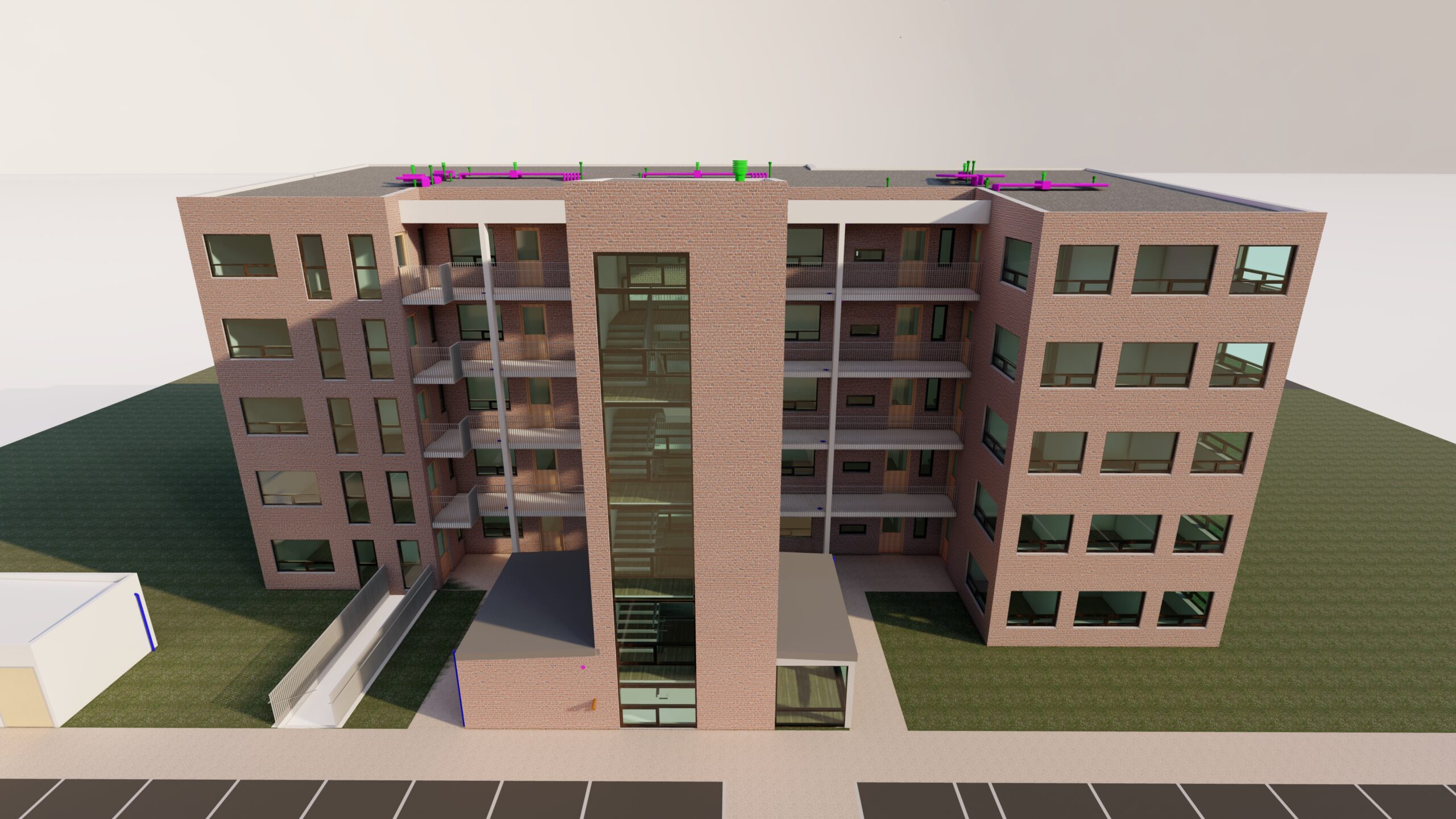
Storigardur, Iceland
This is an residential apartment located in Iceland with all designed MEP systems due to standarts of Iceland.
BIM Modelling and Coordination, Fabrication Drawings, Handover model
4 BIM Engineers
6 months
Storigardur is a residential development project located in Iceland. The objective was to create a fully coordinated BIM environment integrating all MEP systems within the provided architectural and structural models.
The project focused on delivering construction-ready engineering documentation while ensuring seamless coordination between mechanical, plumbing, heating, and drainage systems. Through advanced BIM workflows, the project minimized construction risks and improved collaboration across all stakeholders.
[ Challenges ]
Multi-Discipline Coordination
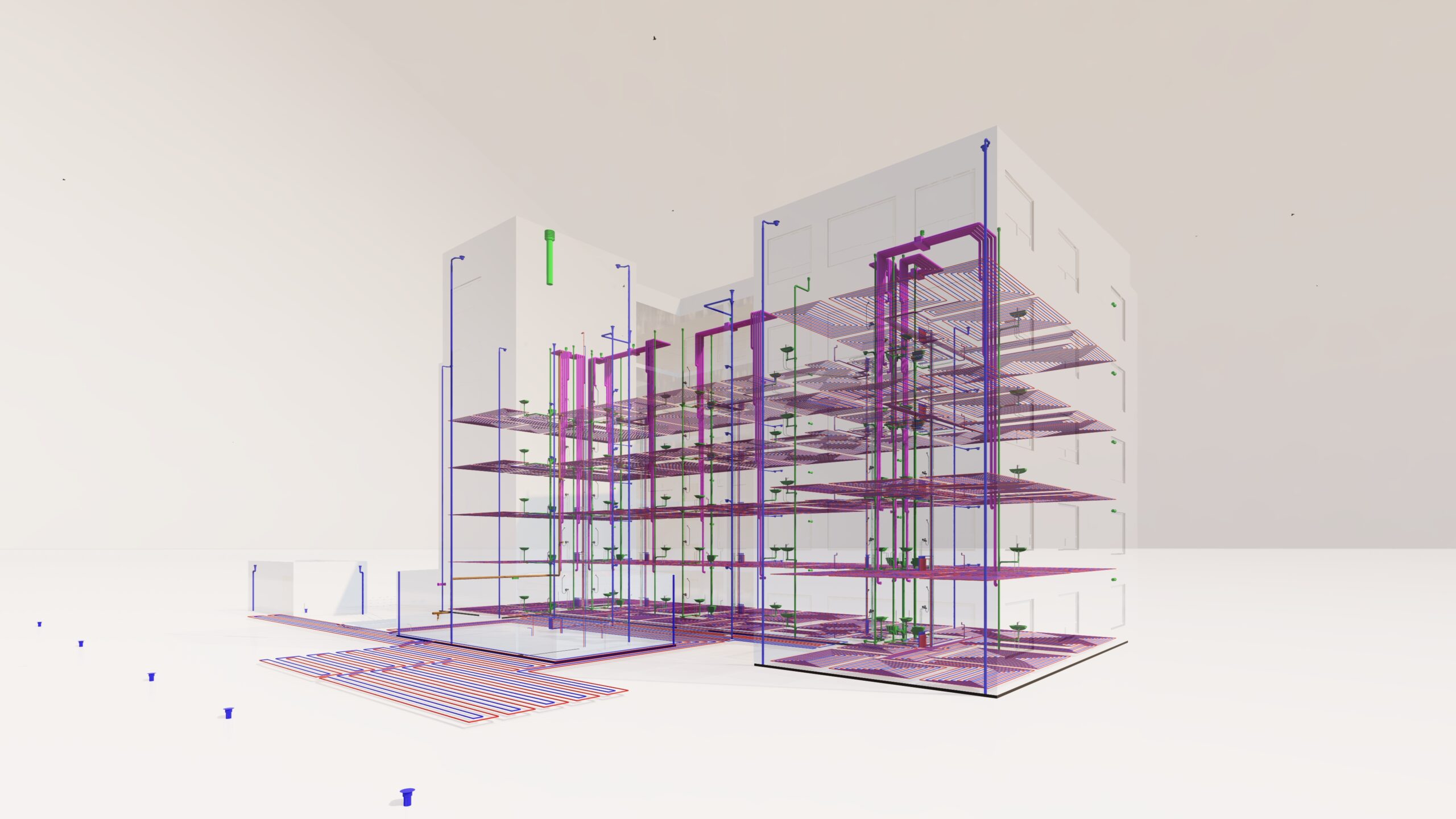
The project required the development of multiple MEP systems within a shared BIM environment. Ventilation, heating, water supply, rainwater, and sewage systems had to be coordinated simultaneously while maintaining compatibility with the architectural and structural models.
- Ventilation system routing
- Heating network integration
- Domestic water services
- Rainwater drainage systems
- Sewage infrastructure coordination
Without a coordinated BIM workflow, engineering systems could easily interfere with one another, increasing project complexity and reducing installation efficiency.
- Routing conflicts between systems
- Limited service zone availability
- Increased coordination workload
- Higher construction risks
Clash Detection Under Design Constraints
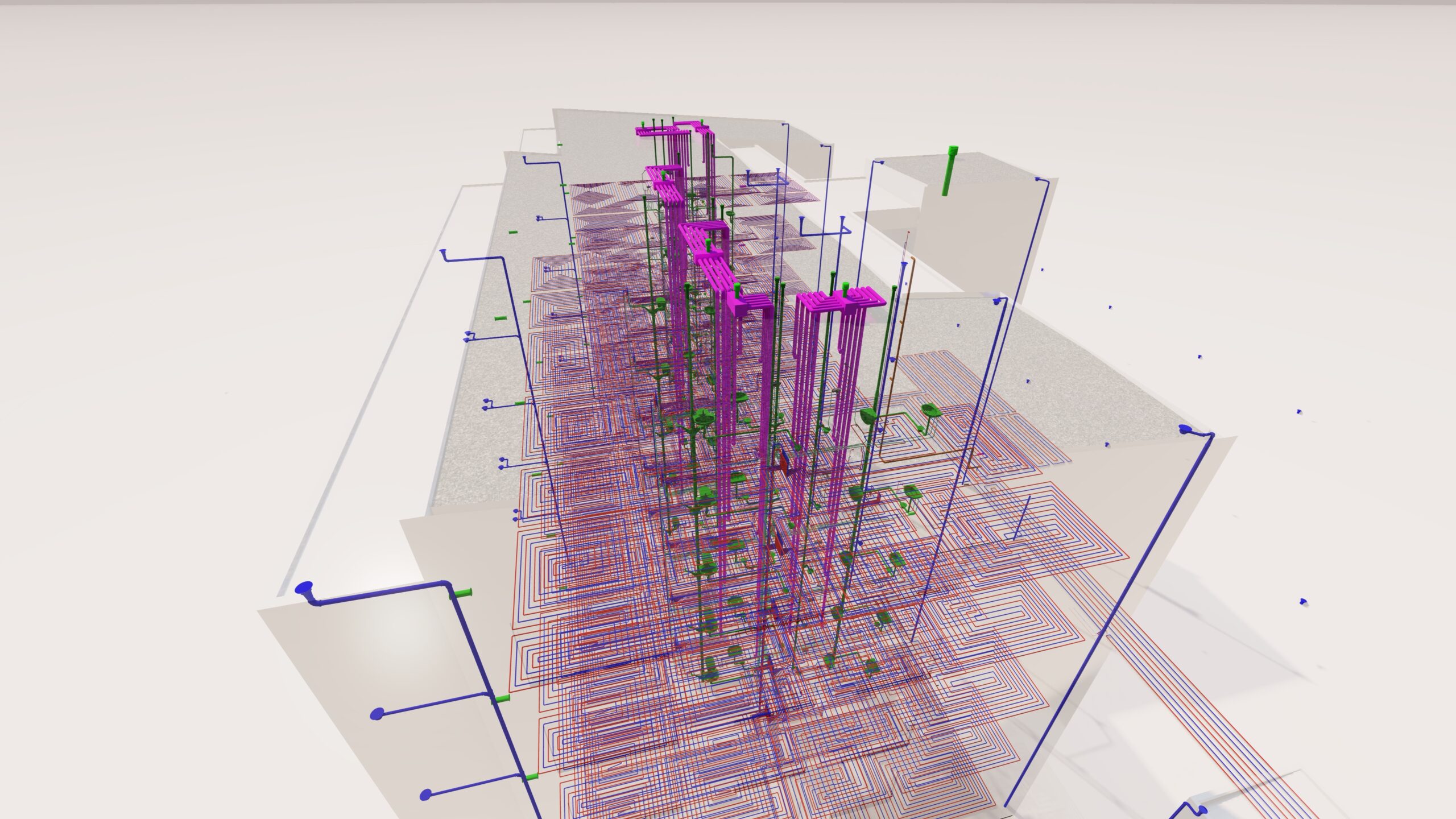
The project involved a high density of engineering services within restricted ceiling and utility spaces. Every system needed to be validated against structural and architectural elements before construction documentation could be issued.
- Structural clash analysis
- Architectural coordination
- MEP collision detection
- BIM model validation
- Service zone optimization
Even small conflicts discovered during construction could result in delays, rework, and additional project costs.
- Construction delays
- Installation rework
- On-site modifications
- Reduced project efficiency
Documentation & BIM Handover Accuracy
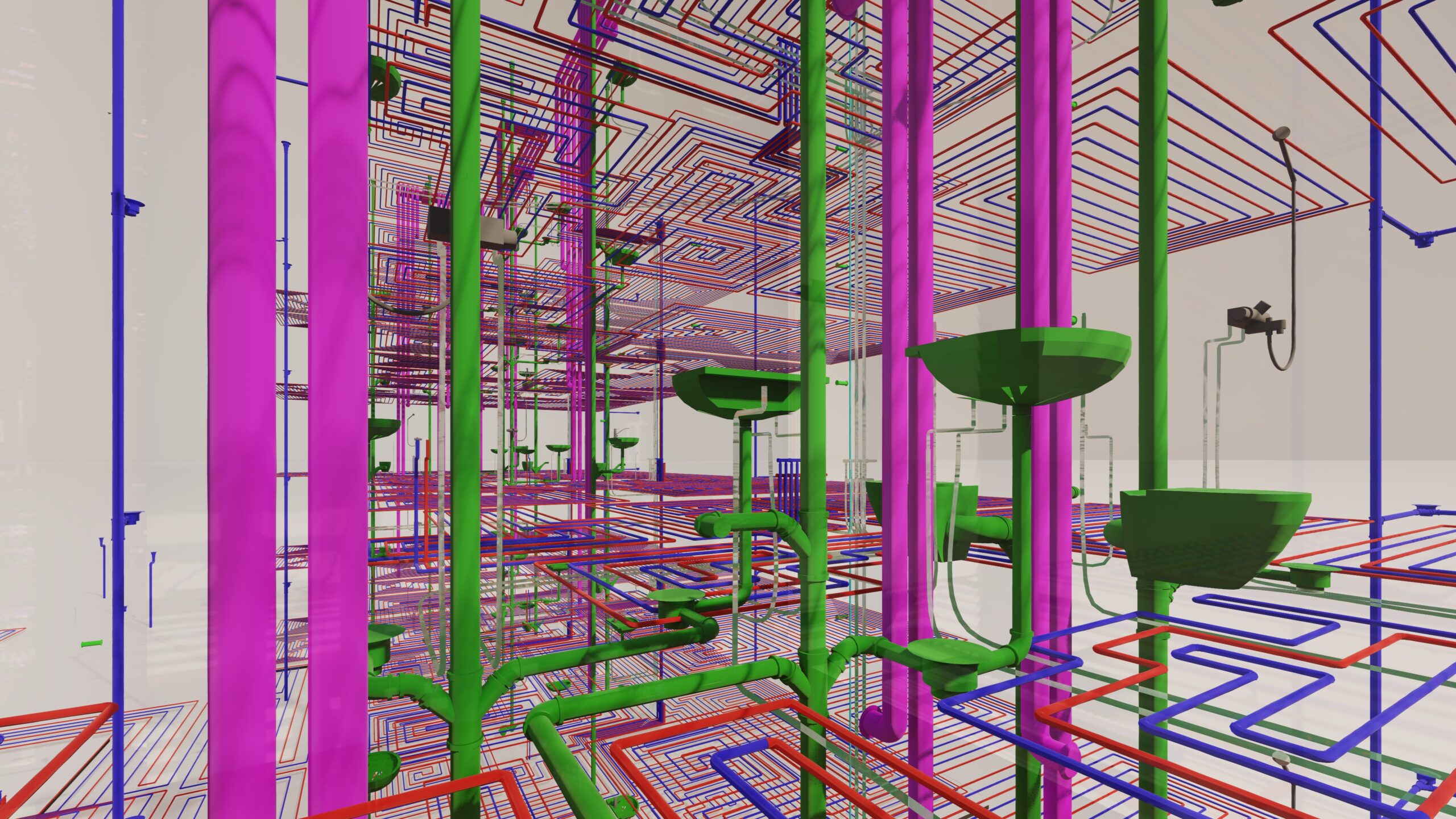
The project required a complete package of fabrication drawings, coordinated documentation, and a BIM handover model that accurately reflected the final engineering design.
- Fabrication drawings
- Openings coordination
- Construction documentation
- BIM handover package
- Engineering support
[ Solutions ]
BIM-FIRST COORDINATION STRATEGY

Due to the complexity of coordinating multiple engineering systems within a residential development, the project was built around a BIM-first workflow from day one. Every engineering discipline was developed inside a shared coordination environment, ensuring visibility across all stakeholders. This approach allowed the team to identify potential issues early, maintain model consistency, and reduce coordination risks before construction documentation was produced.
- Key Actions • Centralized BIM coordination process • Integrated architectural and structural models • Shared multidisciplinary workflow • Continuous model validation • Engineering design synchronization
PROACTIVE CLASH DETECTION
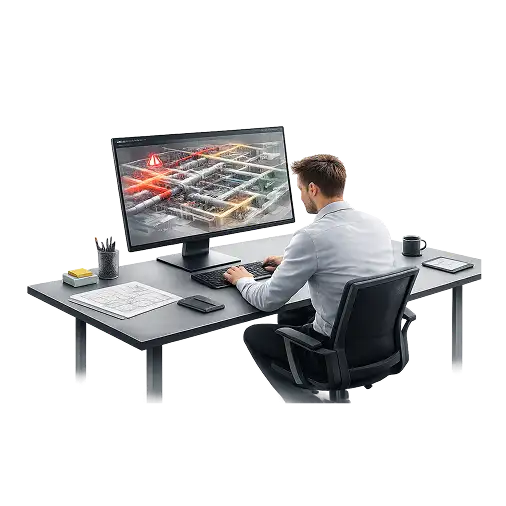
To minimize construction risks, clash detection became a continuous process rather than a final review stage. Engineering systems were regularly checked against architectural and structural elements to identify conflicts before they reached site execution. Using Navisworks and Revit coordination workflows, the team maintained full visibility of potential issues throughout the project lifecycle.
- Key Actions • Regular clash detection reviews • Structural conflict analysis • MEP coordination workshops • Model issue tracking • Resolution verification procedures
DOCUMENTATION CONTROL
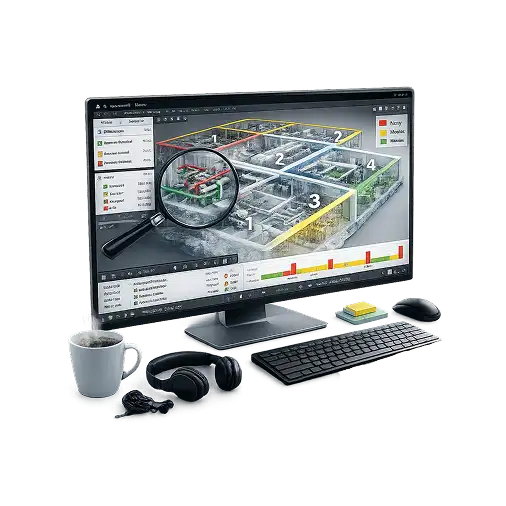
A structured documentation process ensured that fabrication drawings, construction documentation, and BIM deliverables remained aligned throughout the project. Every design update was reflected within both the BIM environment and issued documentation, reducing discrepancies between design and construction teams.
- Key Actions • Fabrication drawing production • Openings coordination management • Construction documentation updates • BIM model synchronization • Quality assurance reviews
[ Scope of Work ]
The initial scope for the first phase included
Design and collaboration were delivered via Autodesk Construction Cloud (ACC), with multiple consultants working simultaneously in a shared cloud environment.

design MEP systems in the buildings

coordination of MEP systems with architectural and structural models

fabrication construction drawings

technical support
[ Delivery Process ]

BIM Setup & Coordination Framework
Before modelling began, we reviewed the architectural and structural models provided by the client and established a common BIM coordination framework for all disciplines. Because multiple engineering systems had to coexist within the same building environment, it was essential to align modelling standards and coordination procedures from the start.
- So we started with the core requirements:
-
 Review architectural and structural BIM models
-
Define MEP coordination strategy
-
Establish modelling standards
- Following approval, a project-specific BIM workflow was created, defining:
-
Modelling standards
-
Coordination priorities
-
Clash detection procedures
-
Documentation guidelines


MEP Modelling & System Development
After the BIM framework was approved, we began developing all engineering systems within Autodesk Revit. The focus was on creating coordinated layouts that could be installed efficiently while maintaining engineering accuracy. All systems were developed simultaneously and continuously validated against the architectural and structural models.
- Key efficiencies included:
-
Centralized BIM modelling workflow
-
Revit-based multidisciplinary coordination
-
Continuous model validation
- This significantly improved consistency and reduced coordination risks throughout the project.
Clash Detection & Final Delivery
As engineering systems evolved, continuous coordination became critical. We performed regular clash detection reviews and coordinated changes across all disciplines to identify conflicts before construction. Rather than waiting until the end of the project, clash detection was integrated into the delivery workflow from the beginning.
- This included:
-
Ongoing clash detection reviews
-
Coordination of architectural and structural updates
-
Verification of construction readiness
- Following coordination approval, fabrication drawings, construction documentation, and the final BIM handover package were delivered to the client. This approach ensured a coordinated, construction-ready BIM model with minimal installation risk.
[ Results ]
The coordinated BIM workflow reduced design conflicts, improved construction readiness, and provided the client with a fully integrated engineering package ready for project delivery.
Construction Drawings & Output
Final construction information included:
Total project area 3,350 m²
Project type Residential Development
Location Iceland
BIM coordination level Fully Coordinated
THE FINAL BIM PACKAGE INCLUDED:
Fully coordinated BIM model
Clash-detected engineering systems
Fabrication-ready layouts
Construction documentation
Openings coordination schedules
BIM handover package
Construction-ready deliverables
Support for future facility management ENGINEERING SYSTEMS DELIVERED
Ventilation Systems
Heating Systems
Cold & Hot Water Systems
Rainwater Systems
Sewage Systems
Business value
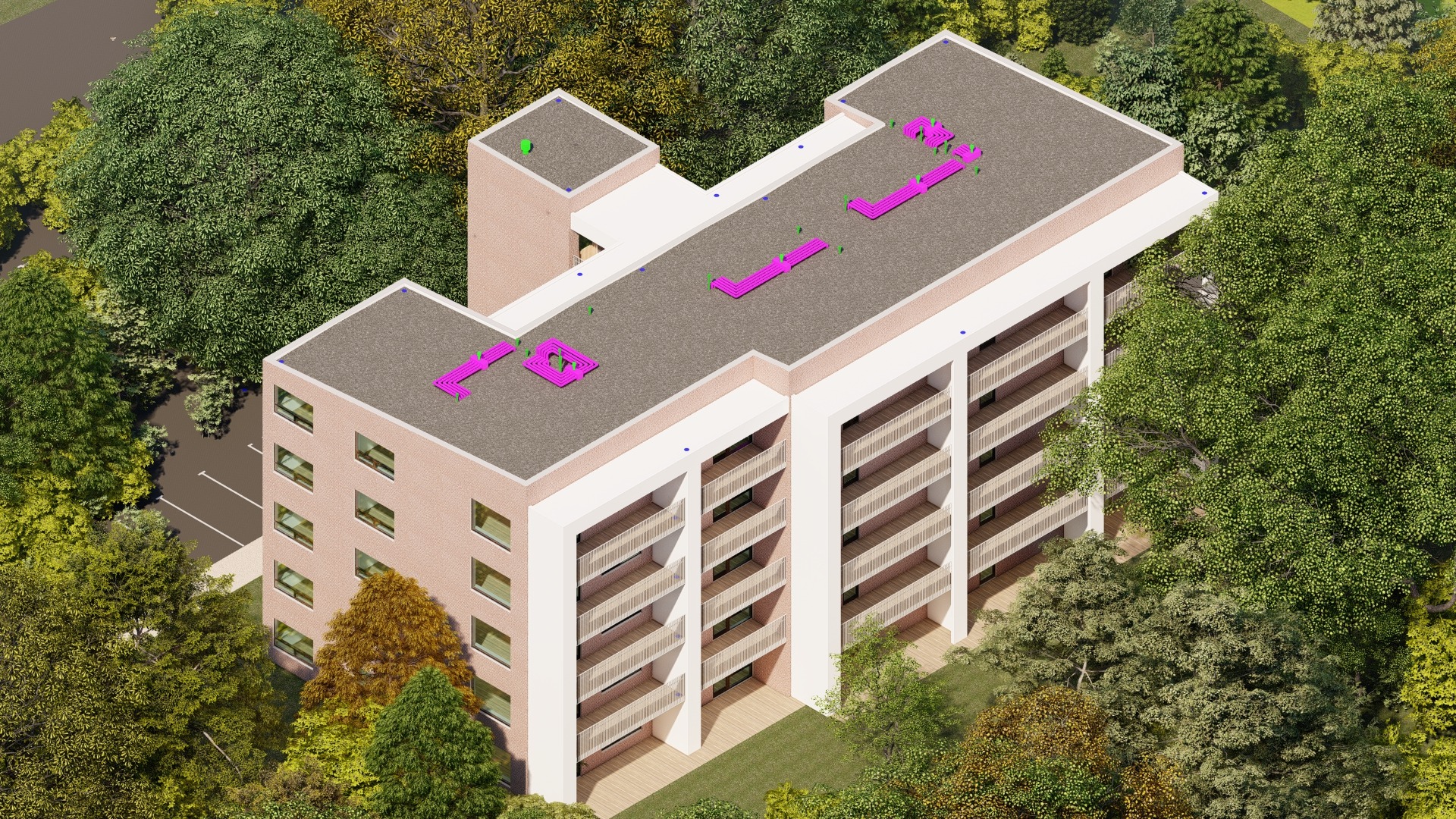 Fully coordinated MEP systems integrated within a single BIM environment
Clash-free engineering design prior to construction
Faster construction preparation through accurate documentation
Reduced project risk through proactive coordination workflows
Improved collaboration between architecture, structure, and MEP disciplines
Complete BIM handover package supporting future facility management
Fully coordinated MEP systems integrated within a single BIM environment
Clash-free engineering design prior to construction
Faster construction preparation through accurate documentation
Reduced project risk through proactive coordination workflows
Improved collaboration between architecture, structure, and MEP disciplines
Complete BIM handover package supporting future facility management [ Tools & Standards ]
Our workflows follow UK BIM standards to ensure quality, consistency, and seamless coordination across disciplines.







[ Case Study ]
Let’s make BIM great together
We’re always open to new collaborations, partnerships, and engineering challenges.
Whether you’re planning a BIM coordination project, a full MEP design, or need an
external engineering partner — our team is ready to help.
Get a Consultation