
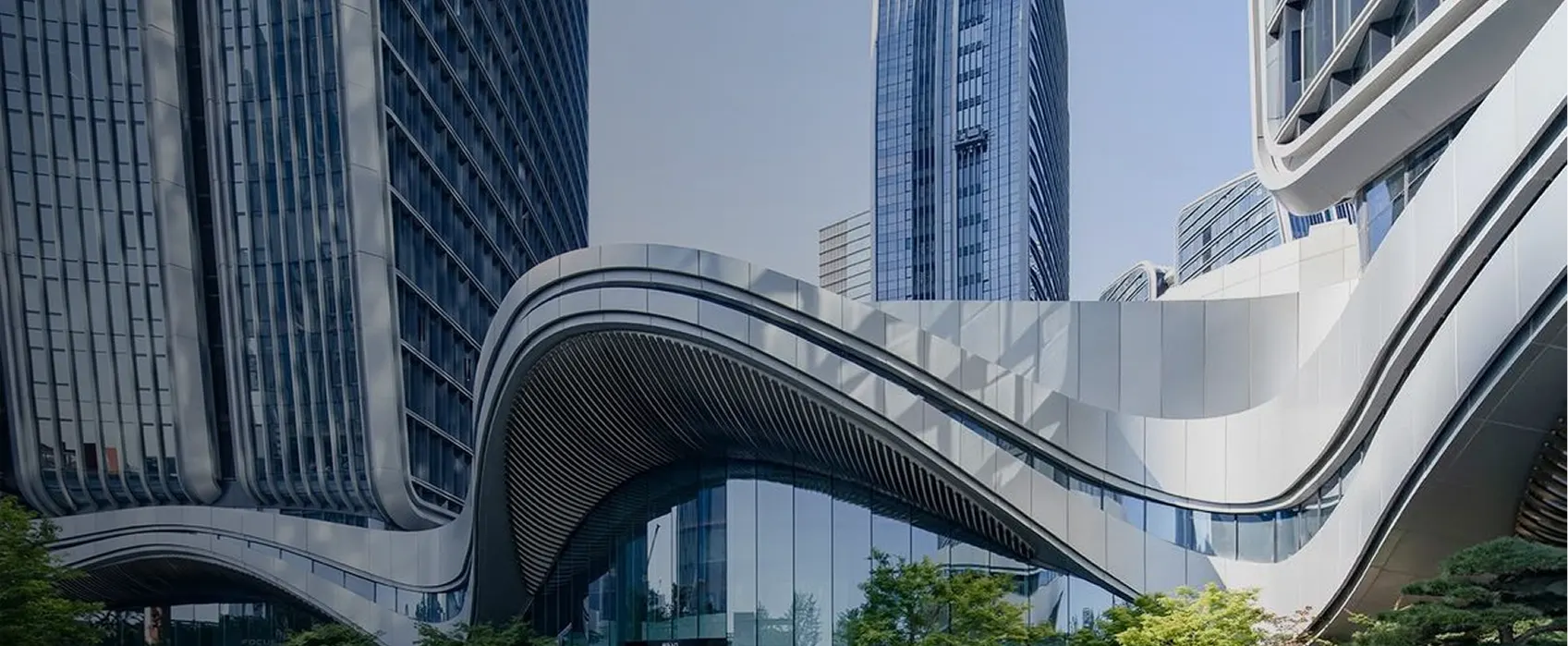
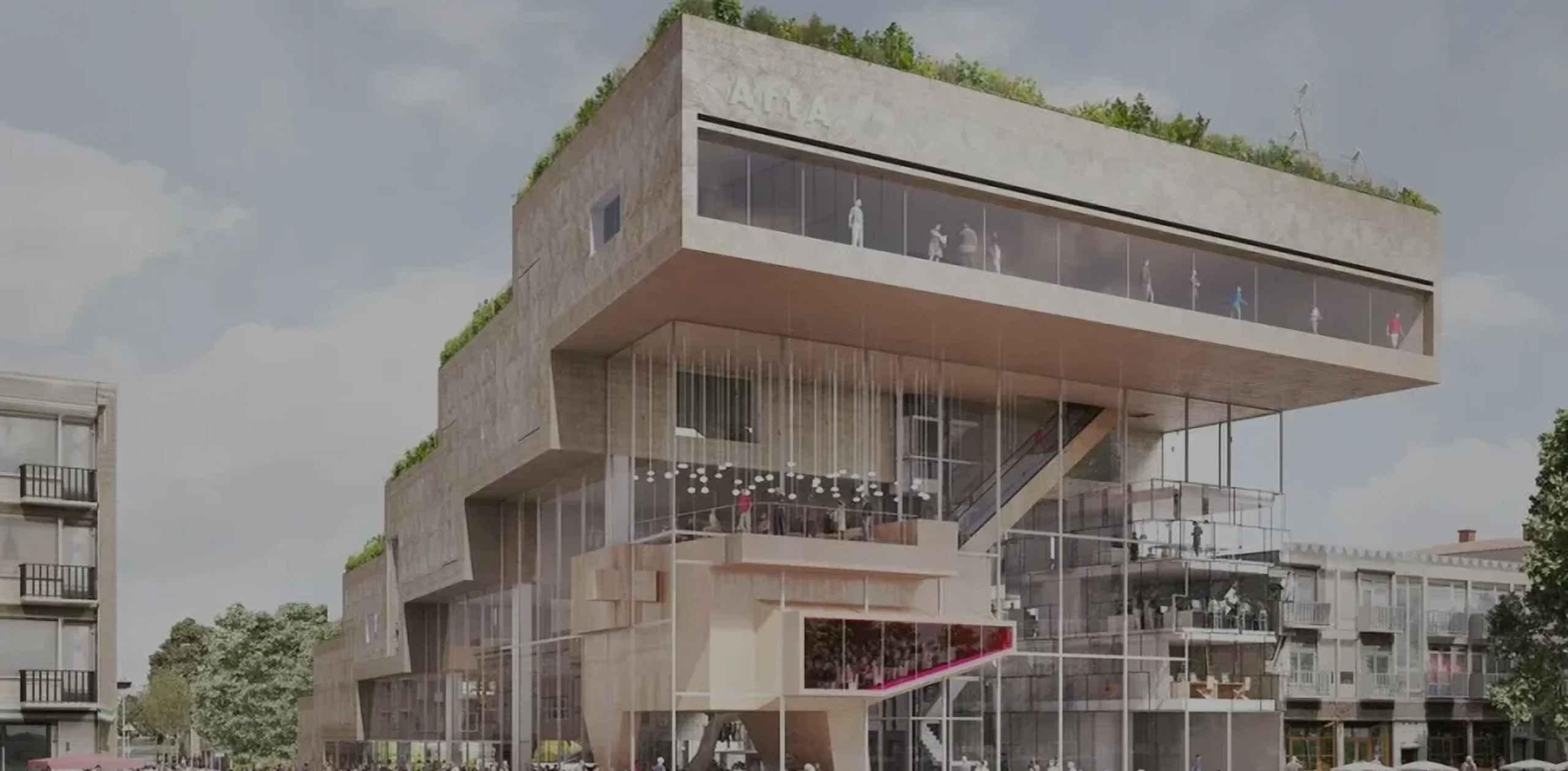
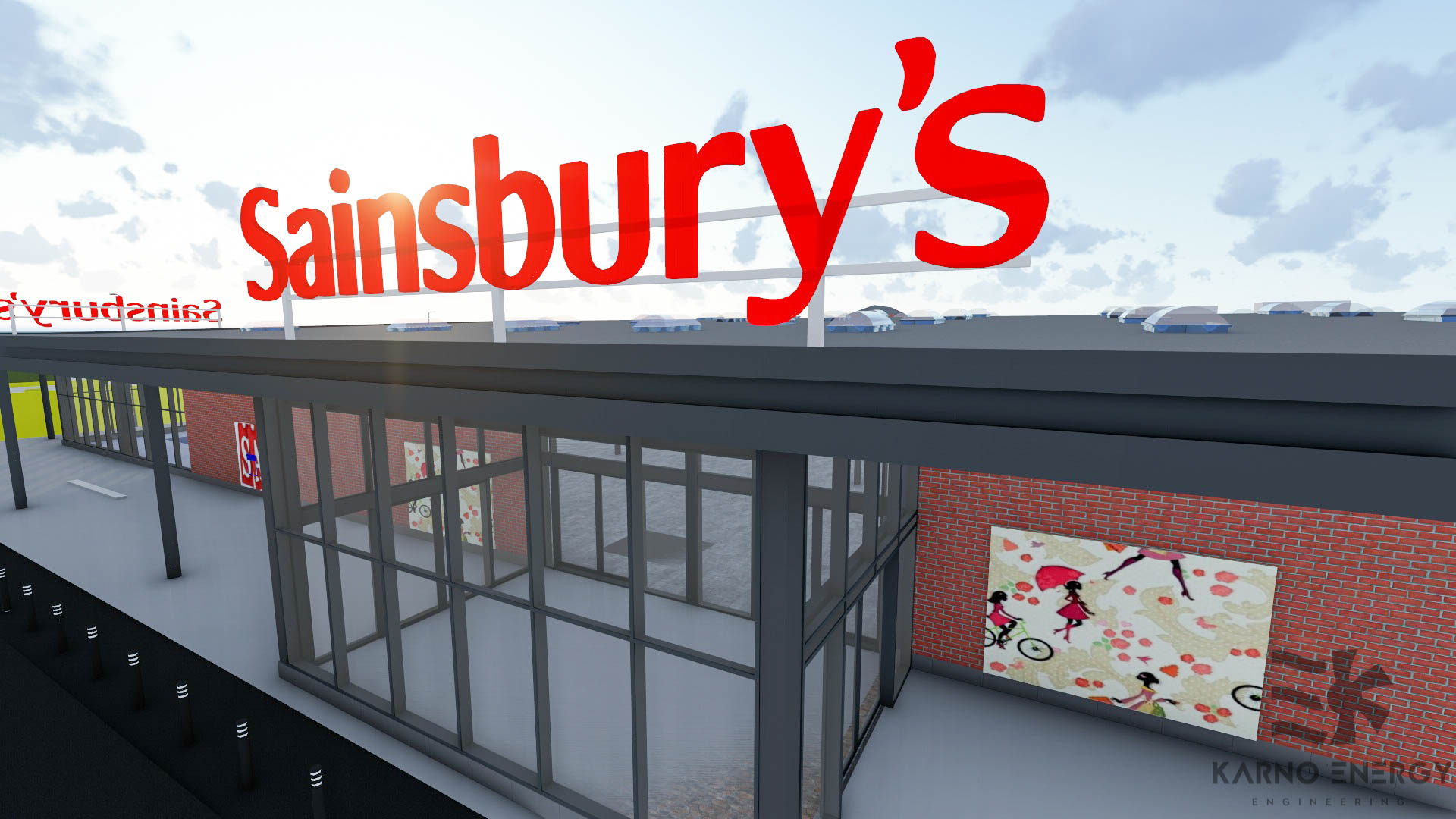
Shopping Mall, London
A large-scale commercial centre in the heart of London, combining retail, leisure, and office spaces.
Karno Energy was responsible for BIM coordination, MEP modelling, and construction documentation under strict time and quality standards.
BIM Modelling, MEP Coordination, Construction Drawings
4 BIM Engineers
6 months
LD14 Data Centre is a mission-critical facility where fire protection systems form a core part of the building’s engineering infrastructure.
Our team was engaged by Paul Levick BSc, Director at Levick Design, to deliver sprinkler design and coordination services for the project, supporting Crown House Enterprise Solutions as the end client. The project demanded high technical accuracy, tight coordination with evolving MEP design, and zero tolerance for installation errors, all within a fixed-price commercial framework.
[ Challenges ]
Non-frozen mechanical design

The sprinkler design had to be delivered while the mechanical design was still under development.
- MEP layouts changed during execution
- Architectural updates triggered further adjustments
- Each change directly impacted sprinkler routing and coordination
Without control, this would normally result in:
- Extensive rework
- Schedule slippage
- Loss of commercial control under a fixed-price contract
Coordination Under Time Pressure

The project was scheduled to start two weeks after we were informed. During this time, we had to gather all the necessary information, agree on the cost, and prepare the team. After the project started, we were surprised to find that the design of the sprinkler systems was being carried out in parallel with the MEP and architecture.
- Ceiling layouts (RCPs) required constant validation against sprinkler coverage
- Structural and MEP clashes occurred frequently
- Coordination decisions had to be made quickly to avoid delays
The project delivery was complicated by difficult communication at the beginning. We waited for a response for four days.
Fixed Price with Variable Inputs

Although the contract was fixed-price, the information received was not fixed. The reason for this was the long decision-making chain and broken communication between contractors.
- uncontrolled scope creep
- untracked design effort
- disputes over responsibility for changes
[ Solutions ]
FROZEN ZONE STRATEGY
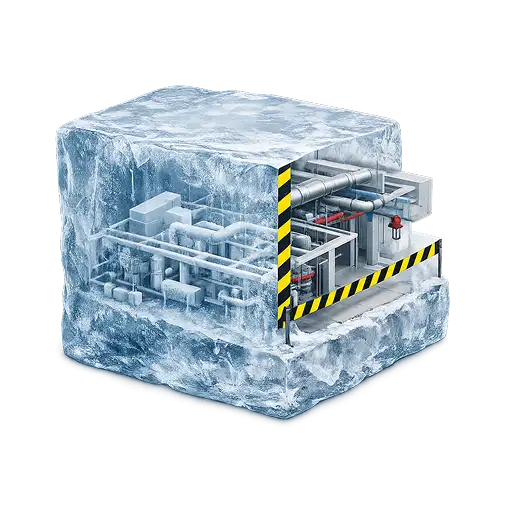
Frozen Zone Strategy
Due to the fact that another company was working on the MEP in parallel and constantly making changes to the model, there was a risk of double work — when we do our part, submit it and the MEP contractor changes the model, all our work is wasted.
- We proactively approached the MEP contractor, discussed the possible risks on both sides, and agreed to apply the Frozen Zone approach to avoid unnecessary rework:
DAILY CHANGE MONITORING VIA NAVISWORKS
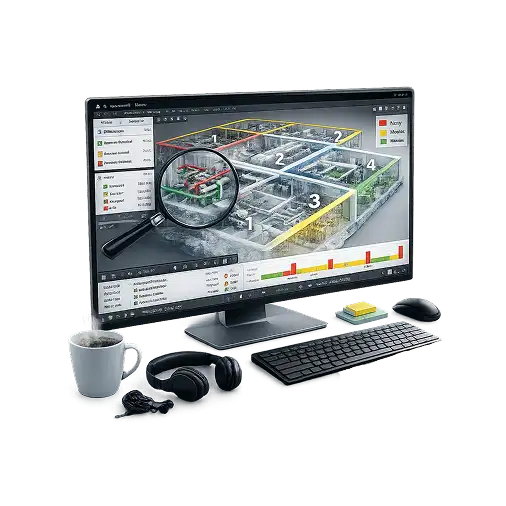
Daily Change Monitoring via Navisworks
Since we agreed on a fixed price with the customer, we understood that a large part of the overpricing on projects was due to rework. That is why, in order to avoid lost margins, we monitored model changes on a daily basis.
- To do this, we established a daily coordination routine:
This enabled proactive decision-making rather than reactive redesign.
STRUCTURED VARIATION CONTROL

Structured Variation Control
Approving changes is a rather complicated procedure and difficult for all contractors. There are two ways to do this:
Method 1
Wait a week until the meeting, discuss the issue with a larger team and look for a solution, then after the meeting exchange emails back and forth between stakeholders who agreed to do something at the meeting but then do not respond.
Method 2
Prepare a coordination model with fixed types of changes. Prepare a letter with a description and time frame for eliminating new intersections and send it to the customer immediately.
This requires extra effort on our part, but we chose this option because it is faster and helped us meet the project deadlines.
This approach preserved both commercial control and client trust.
CLEAR TEAM STRUCTURE

Clear Team Structure
Since the project was fixed price, a PM is always involved in projects of this type to avoid inefficiency on the part of engineers.
A data centre is a complex engineering structure that contains several engineering systems.
Therefore, such projects require a person with extensive experience. Due to the very tight deadlines at the start of the project, it was difficult to find a suitable specialist, as they are always busy.
The project team was deliberately compact and focused:
This structure ensured fast decisions without unnecessary management layers.
[ Scope of Work ]
The initial scope for the first phase included
Design and collaboration were delivered via Autodesk Construction Cloud (ACC), with multiple consultants working simultaneously in a shared cloud environment.

3D modelling of sprinkler systems in small RCP areas1

3D modelling of
- pipework
- void and exposed sprinkler protection

FHC calculations completed in Canute

Production of RCP drawings only during the initial 6-week phase
(pipework sheeting excluded from this phase)
[ Delivery Process ]

Pilot Zone (MVP Phase)
The pilot zone is a decisive point in determining how the project will move forward. If even the smallest detail is overlooked, the project could be sent into endless revisions. At this stage, all differences must be resolved.
- So we started with the global factors:
-
 Validate sprinkler coverage
-
Confirm RCP coordination
-
Align modelling and documentation standards
- Following approval, a project-specific delivery manual was created, defining:
-
Modelling rules
-
Coordination priorities
-
Documentation standards


Production Phase
After defining the tasks and scope of work, we clearly divided all tasks in our Clickup task management system, which helps us keep our finger on the pulse and quickly manage priorities, and began modelling fire extinguishing systems in Revit.
- Key efficiencies included:
-
Use of an internal Revit template with proven families and styles
-
Diroots and custom plugins to accelerate modelling and sheet creation
This significantly reduced design time and improved consistency.

Coordination & Issue Resolution
Since we worked online with all contractors and needed to monitor changes in real time, we used Navisworks clash detection by sets, which allowed us to avoid major problems:
-
daily monitoring of changes
-
prioritisation of critical clashes
-
preparation of solution-led proposals for coordination meetings
Rather than presenting problems, we arrived at meetings with clear resolution options, accelerating approvals and keeping momentum.
[ Results ]
This level of detail minimised site queries and installation uncertainty.
Construction Drawings & Output
Final construction information included:
Total project area: 9,600 m²
Total sprinklers: 2,420 units
Ultimately, a lot of work went into creating a high-quality model, but it would be worthless without high-quality drawings. That is why the drawings were highly detailed and installer-focused, including:
Vertical dimensions from FFL to pipe centreline
Clearances to slab soffit
Colour-coded horizontal references to structure and walls
BWIC openings compliant with Fire Protection Golden Rules
Full fixing details, with sprinkler systems fixed directly to the slab Issued Drawings
RCP drawings: 12 sheets
Pipework drawings: 42 sheets
Business value
Project delivered within original programme
Installation teams worked continuously without downtim
Design and installation progressed in parallel, floor-by-floor
All variations were agreed and controlled
Fixed-price budget maintained
Detailed drawings eliminated the need for repeated site clarifications [ Tools & Standards ]
Our workflows follow UK BIM standards to ensure quality, consistency, and seamless coordination across disciplines.








[ Case Study ]
Let’s make BIM great together
We’re always open to new collaborations, partnerships, and engineering challenges.
Whether you’re planning a BIM coordination project, a full MEP design, or need an
external engineering partner — our team is ready to help.
Get a Consultation